 Image 1 of 1
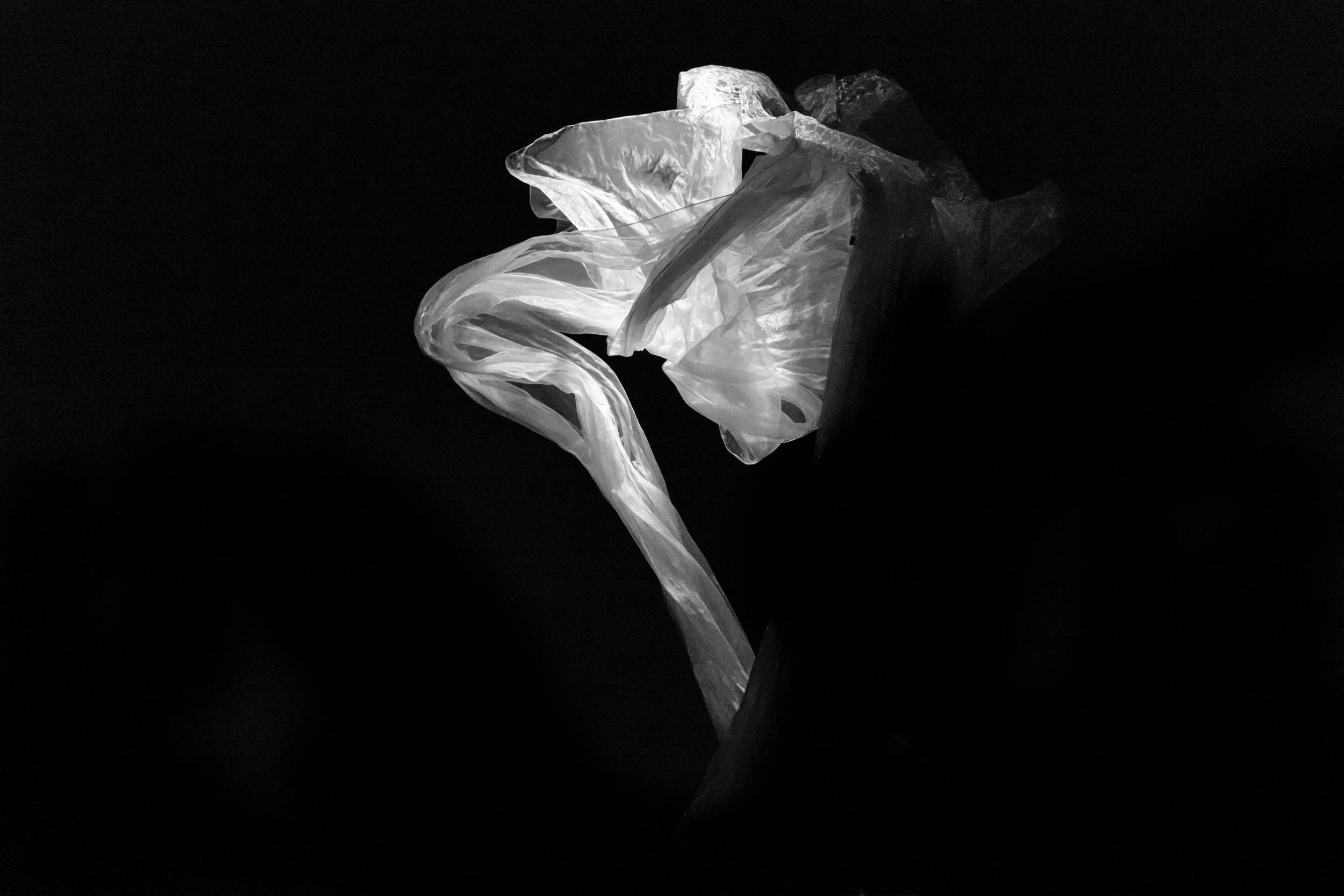
2015年12月、リオデジャネイロに開館したばかりの「明日の博物館」。暗い展示室で、花崗岩の円盤から吹き上がる風に、絹の布が舞っていた。私にはそれが布ではなく、肉体を離れて踊り合う自由な魂に見えた。人で溢れる部屋を闇に沈め、布だけを写した。その中の一枚に、跳躍するバレリーナがいた。脚、背中、そして舞い上がる衣に隠れた顔。それはまさに、踊るバレリーナの魂だった。
December 2015, at the newly opened Museum of Tomorrow in Rio de Janeiro. In a dark room, silk sheets danced above a granite disc, lifted by air rising through its gaps. To me, they weren’t silk. They were free souls, out of their bodies, dancing together. The room was full of people, so I let it fall into darkness and kept only the silk. In one frame, a ballerina leapt: legs, back, and a face hidden by her flying cardigan. It was the soul of a ballerina, dancing.